How To Start A Conversation Anywhere
How to use context in conversation
Everyone thinks small talk requires witty lines or perfect timing. But that’s not true. The easiest, most effective openers are hiding in plain sight. They’re in the context you’re already sharing.
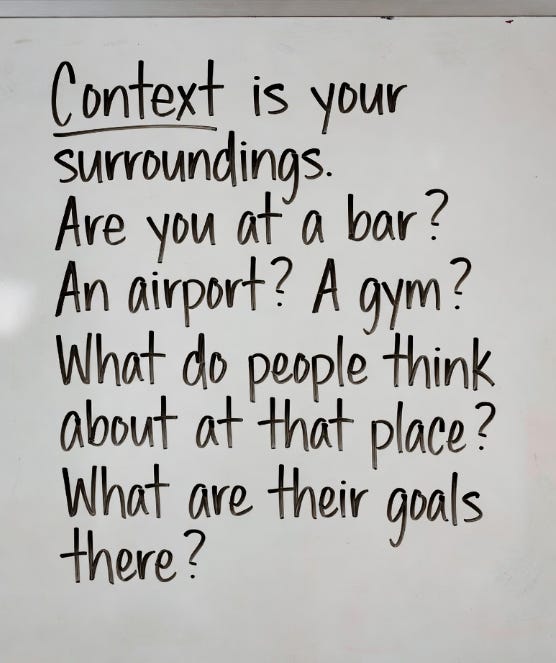
Context is the current frame you and your fellow conversant inhabit. When you start a conversation, you are in a physical environment. It contains clues of possible things to discuss. They are relevant to the frame of mind that the person is in. This makes them more likely to discuss them, as opposed to bringing up something unrelated.
You don’t need to win someone in the first five seconds of a conversation. After all, this is just level one of conversation. Level one is for determining if they want to continue to level two: play, and level three: deep talk. Starting a conversation with a contextual opener is a great way to figure this out.
So, then how do we apply this concept in our conversations?
Let’s say you’re at a bar with lots of beers. There are 80 beers on tap, and everyone there loves craft beer. There’s someone next to you with an odd colored beer you’ve never seen before. The context here is that you’re in a bar where people like craft beer, so you could easily ask questions like: "What kind of beer is that? I’ve never seen it before.” Easy opener.
Figuring out how to start a conversation from context is simple. You just need to understand where you are. What people are like where you’re at and go from there. If they’re at a particular place, they’re probably in the mood to talk about things related to that place.
Here’s another example. Let’s say you’re at a public yoga event. You’ve just gotten done, and everyone is about to leave. There’s a beautiful girl next to you. What do you say? How about this, “that reverse butterfly 5,000 stretch was wild, what did you think of that?” Simple.
You might be wondering, what if these openers don’t work? What then?
It doesn’t matter. Remember that level one of conversation, or small talk, is for determining if someone wants to continue to deeper levels of conversation. If they don’t, they’ll give you one-word answers or will look like they’re trying to get away. If that’s the case, you move on to the next person. If someone isn’t interested in discussing their surrounding context with you, then their interest level is too low to pursue. Only pursue those who share your interest level in conversation.
Let’s back up a bit and talk about why understanding context is necessary.
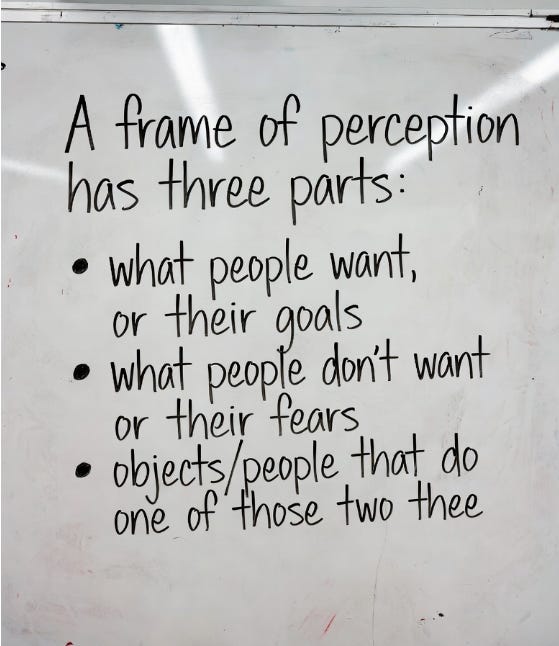
If you make a comment about the shared context, you are showing the other person that you share their frame of perception. This allows both you and them to embody the same experience. When people share the same embodied experience, they grow closer, even if only a little bit. A frame of perception is defined by three characteristics: what someone wants, what they don’t want, and objects/people that do one of those two things. By making a joke about the context or asking them a question about it, you’re showing them that you understand their frame of perception.
Understanding this is crucial to great conversation. Think about our prior examples. If someone is at a craft beer bar, they probably want to enjoy a good beer. They probably like talking about craft beer. If someone is at a yoga event, they’re probably into exercise. They’ll love talking about how challenging their workout was. People love talking about their current goal, whether that be to exercise or enjoy a good beer.
On the flip side, frames of perception also help you understand what NOT to talk about. If they like exercising, maybe they’re not so fond of Cheetos and soda. If you’re at a beer bar, don’t ask if they like wine. We can’t guarantee these assumptions are correct, but we can know that it’s less likely that these will be appropriate in these contexts.
The deeper you go into someone’s frame of perception, the more your relationship grows. You could define a deep relationship as one where you share a frame of perception to such a degree that your thoughts, emotions, and consciousness are practically the same. This creates the feeling of emotional safety. That is a feeling that many people spend their entire lives chasing. By understanding the context of a situation and using openers based on it, you are introducing a small pebble of safety and understanding to that person. And that’s what we all want.
If you liked this article and want to learn more about socializing and dating, follow Vibe Dynamics or share the article with the buttons below.
Neo out.
§